

How to Identify a Water Heater Leak and Choose the Right Fix
A leaking water heater needs prompt attention, whether water is escaping from the tank, a fitting, or a valve. The first questions are where the water is coming from and how quickly it is leaking. A slow drip at a drain valve may require a relatively simple repair. Water pooling beneath the tank, however, could signal a serious failure and put nearby floors, walls, and belongings at risk.
Water inside a heater can be hot enough to scald. Avoid touching or stepping into leaking water until you know it is safe. Start with the immediate safety steps below, then use the leak’s location to understand the possible causes and repairs.
What to Do Right Now: Four Steps
If you discover a leaking water heater, shut it down safely, stop the incoming water, protect the surrounding area, and arrange service.
- Turn off the power or fuel, if safe. For an electric heater, switch off its circuit breaker if you can reach the panel without entering standing water. For a gas heater, follow the manufacturer’s shutdown instructions. If you smell gas, leave the area and contact your gas utility or emergency services from a safe location.
- Shut off the cold-water supply. Close the valve on the cold-water inlet above the heater, if you can reach it safely. A round handle generally turns clockwise; a lever usually turns one-quarter turn. Do not force a stuck valve.
- Protect the area. Move belongings away from the water. Use towels or a shallow pan only when you can do so without risking burns or electrical contact.
- Request prompt service. Call (727) 855-8080, describe where the leak appears, and ask about the earliest available appointment.
Can’t locate the shutoff valve, or it won’t turn? Florida Water Heater Pros can discuss the next steps over the phone. If water is spreading rapidly and you cannot isolate the heater, shut off the home’s main water supply if it is safe to do so.

Is a Leaking Water Heater Dangerous?
Water damage and scalding are the most immediate concerns. A storage tank may hold 30 to 80 gallons of water, and a major leak can damage flooring, drywall, and nearby belongings. Escaping hot water can also cause burns.
Excessive temperature or pressure creates a separate safety concern. A temperature and pressure (T&P) relief valve helps protect the tank by releasing water when conditions exceed its rating. A blocked, defective, or improperly installed valve can increase the danger of a serious tank failure. Never plug, cap, or obstruct its discharge pipe.
Gas-fired heaters also require attention to combustion and carbon monoxide safety. For more information, see Water Heater Safety: Explosions, CO & Scalding Risks Explained.
Can You Still Use Water While the Heater Leaks?
When you don’t know the source of a leak, shutting down the heater and its incoming water supply is the safest default. Even a small drip can worsen unexpectedly, and water near electrical components creates additional risk.
A plumber may determine that a minor fitting leak can be repaired without replacing the heater. Until then, avoid operating a leaking unit if the source is uncertain. If you close only the heater’s cold-water inlet, the home’s cold-water taps will generally continue to work. Do not restore power to an electric heater until you have confirmed that its tank is completely full.
Water Heater Leaking From the Bottom
Water beneath a heater can come from the drain valve, a T&P discharge pipe, condensation, or the tank itself. The location of the puddle alone does not identify the source.
- Drain valve: A loose, worn, or damaged valve near the bottom of the heater may drip.
- T&P discharge pipe: Water released by the relief valve may exit near the floor, making the leak appear to originate at the bottom.
- Condensation: Moisture can collect on a cold surface in humid conditions, although you should not assume a puddle is harmless condensation without checking.
- Tank leak: Water escaping from beneath the outer jacket may indicate corrosion or a breach in the inner storage tank.
A plumber can trace the water to its source. Drain-valve problems and some relief-valve issues may be repairable. A confirmed leak through the steel storage tank generally requires replacing the water heater, regardless of its age.
Water Heater Leaking From the Top
Top leaks often involve the cold-water inlet, hot-water outlet, anode rod connection, or another fitting. A loose or corroded connection may need tightening, resealing, or replacement. The appropriate repair depends on the heater’s design and the condition of its components.
Not every apparent top leak is repairable. Water may travel along a pipe or beneath the heater’s jacket, making the source difficult to identify. A technician should inspect the connections and confirm that the tank itself remains sound before recommending a repair.
Repair costs vary with the affected part, access, labor, and any additional plumbing work. Ask for an estimate after the source has been identified.
Water Heater Leaking From the T&P Relief Valve
A leaking temperature and pressure (T&P) relief valve may indicate thermal expansion, a defective valve, or unsafe temperature or pressure. The valve is an essential safety device, not an ordinary drain.
When water heats up in a closed plumbing system, it expands and can raise pressure. A properly designed and functioning thermal expansion system helps manage that increase. A relief valve may also leak because of wear, debris, or damage. Persistent or forceful discharge requires prompt professional evaluation.
Turn off the heater if you can do so safely, and do not cap the valve or its discharge line. The plumber should identify and correct the cause rather than simply replacing the valve without checking the system. See T&P Relief Valve: Function, Testing & Leaks for more information.
Water Heater Leaking From the Drain Valve
A drain-valve leak may result from a loose connection, worn internal parts, trapped sediment, or a damaged valve. Depending on the condition and design, a plumber may be able to repair or replace it.
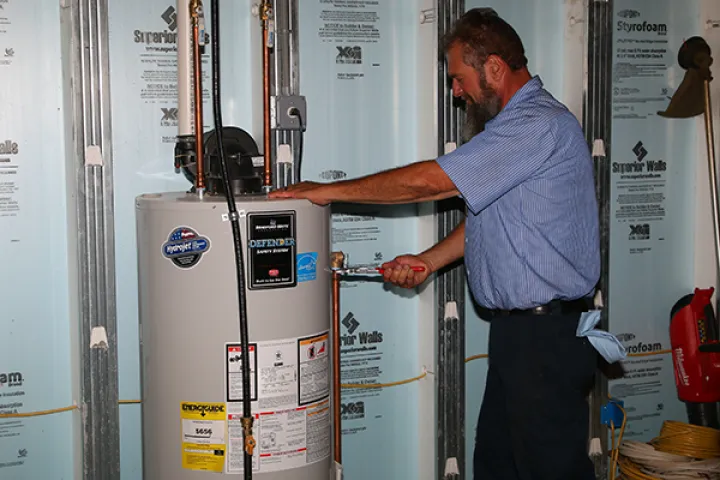
Avoid forcing a stuck valve or overtightening a plastic fitting. Do not rely on a hose cap to conceal an ongoing leak or substitute for a proper repair. If sediment prevents the valve from opening or closing, the technician may also need to evaluate the tank’s condition.
How Long Will a Leaking Water Heater Last?
There is no reliable way to predict how long a leaking water heater will continue operating. A fitting leak might remain small for a time, but it can also worsen. A leak through the tank wall indicates a more serious failure and can lead to substantial water damage without warning.
Conventional tank water heaters often last roughly 8 to 12 years, although actual service life varies. Age matters when weighing repair costs, but a confirmed tank-body leak generally calls for replacement even on a newer unit.
For help evaluating repair costs against the age and condition of your equipment, see our water heater repair-or-replace guide.
Get Help With a Leaking Water Heater in Pinellas County
Florida Water Heater Pros helps homeowners in St. Petersburg and throughout Pinellas County diagnose water heater leaks and determine whether a repair or replacement makes sense.
Call (727) 855-8080 to describe the leak, discuss immediate safety precautions, and request the earliest available service. Same-day scheduling may be available, depending on technician availability, parts, and the work required.
For more information about our services, visit water heater repair in St. Petersburg.
Call (727) 855-8080 for a free phone estimate.
Florida Water Heater Pros
Phone: (727) 855-8080
Service Area: Clearwater, St. Petersburg, and Pinellas County, FL
Florida Plumbing License: CFC1432953
Licensed and Insured
